Regulations
Lorry Weight Limits Explained: GVW, GTW, and Payload for New Operators
Most overloading cases don't start with someone trying to cheat. They start with a rushed morning, a driver who trusts the delivery note, and a set of plate figures nobody has read since the vehicle arrived. If you're new to running lorries — or to running a small fleet that has just crept past 3.5 tonnes — the weight ratings on the vehicle are not guidance. They are legal maxima, and they decide which licence you need, what you may tow, and how much cargo you can actually put on board.
The three numbers that cause most of the trouble
Almost every weight argument comes back to the same three terms, and they are easy to mix up because they sound similar.
- GVW (gross vehicle weight) — the maximum the vehicle itself may weigh, fully loaded. That figure includes the driver, passengers, fuel, tools, the body and everything in the back. On paperwork and licence rules you'll often see the same figure called MAM (maximum authorised mass) or, on older documents, the plated weight.
- GTW (gross train weight) — the maximum combined weight of the vehicle plus its trailer when both are loaded. Sometimes called gross combination weight. If the plate reads 3,500 kg GVW and 6,000 kg GTW, the trailer and its load cannot add more than 2,500 kg, and the whole outfit must not exceed 6,000 kg.
- Payload — what's left for the load once the vehicle is ready to go. It is GVW minus the kerb weight, then minus the driver, fuel, fitted equipment and anything else travelling with you. It is never quite as generous as the brochure suggests.
One relationship ties them together: payload is a subtraction, and any weight you forgot to count comes straight off your cargo allowance.
Where the figures live, and why the plate is law
Every goods vehicle carries a manufacturer's plate, usually in the cab or on a door pillar. It lists the GVW, the GTW and the maximum weight for each axle. Some vehicles also have a plating certificate or a Ministry plate setting out the same limits. Those figures are the legal ceilings, not targets to be approached politely.
Axle limits catch people out because they are separate from GVW. You can be comfortably under the gross weight and still illegal, because too much of the load is sitting over the rear axle. A 400 kg pallet pushed to the back doors can push a light van's rear axle over its limit even when the total looks fine.
Working out real payload
Take a 3,500 kg van with a kerb weight of 2,200 kg. Nominal payload: 1,300 kg. Now add an 85 kg driver, an 80 kg second man, 45 kg of fuel, a tail lift, ply lining, a toolbox, straps and a couple of sack trucks. The realistic payload may drop below 1,000 kg. Then a customer calls and asks you to take "about a tonne". That margin has gone.
Do this calculation for each vehicle in your fleet, write it down, and put the figure where the driver can see it. If you have fitted anything since the vehicle was new — a new body, a crane, a refrigeration unit, a bulk tank — weigh the vehicle again rather than trusting the handbook.
Towing: GTW, trailer MAM and your licence
The trailer has limits of its own
A trailer's MAM is a limit in its own right. So is the nose weight the towing vehicle's coupling is rated for, and so is the towing limit published for the vehicle. All of them have to be satisfied at the same time as the GTW.
Licence categories are set by plated weights, not actual ones
A category B licence covers vehicles up to 3,500 kg MAM. In Great Britain, since December 2021, category B holders can also tow a trailer of up to 3,500 kg MAM without a B+E test. Above that you move into C1 territory (3,500 kg to 7,500 kg) and, for heavier combinations, C1E or C+E. Goods vehicles over 3,500 kg also bring driver CPC and tachograph rules into play.
Here is the trap: licence entitlement is decided by plated weights. Towing an empty trailer plated above your entitlement is still driving otherwise than in accordance with your licence. Before you hitch up, check that the trailer's MAM sits within the vehicle's towing limit, that the combined plated weights sit within the GTW, that the nose weight is inside the coupling limit, and that your licence covers the plated combination. Rules have changed in recent years and Northern Ireland differs, so confirm your own entitlement on gov.uk rather than relying on what a colleague did in 2019.
A loading routine that keeps you legal
- Copy the plate figures for every vehicle onto a card in the cab, along with the true empty weight.
- Use a public weighbridge to establish the empty weight after any bodywork change, and keep the ticket.
- Weigh the loaded vehicle whenever the load is anywhere near your payload figure. It costs little and settles arguments instantly.
- Check individual axle weights, not just the gross weight.
- Place heavy items over or between the axles, and spread the load rather than stacking it at one end.
- Treat the customer's stated weight as a claim, not a fact. Reweigh, or ask for a weight ticket.
- Keep delivery notes, weight tickets and loading records. If you are stopped, paperwork showing that you plan and check loads works in your favour.
- Brief drivers properly on all of it. Anyone who causes or permits an overload — driver, loader, transport manager or director — can find themselves in the frame.
What happens if you are stopped
DVSA officers and the police can direct you to a weighbridge or use roadside weighing equipment. If you are over, expect a prohibition notice stopping further movement until the load is reduced. Lesser excesses may be dealt with by fixed penalty; more serious cases go to court, where fines can be substantial and a conviction is recorded against the driver. For the operator, an overloading conviction can be raised at a public inquiry and can put the O-licence at risk. Insurers take a dim view of it as well. If you are facing prosecution or an O-licence hearing, take proper legal advice rather than trying to handle it yourself.
Get the basics right in your first month
Weigh every vehicle empty. Record the plate figures. Work out a realistic payload for each one and share it with the drivers. Then weigh a few loaded runs, even when you think you don't need to, so you learn where the real limits sit on your routes and your typical loads. Operators who do this rarely get caught out, because they know before they leave the yard whether the load fits. Operators who don't find out at the roadside, with a prohibition notice on the windscreen and a customer waiting for a delivery that isn't moving.
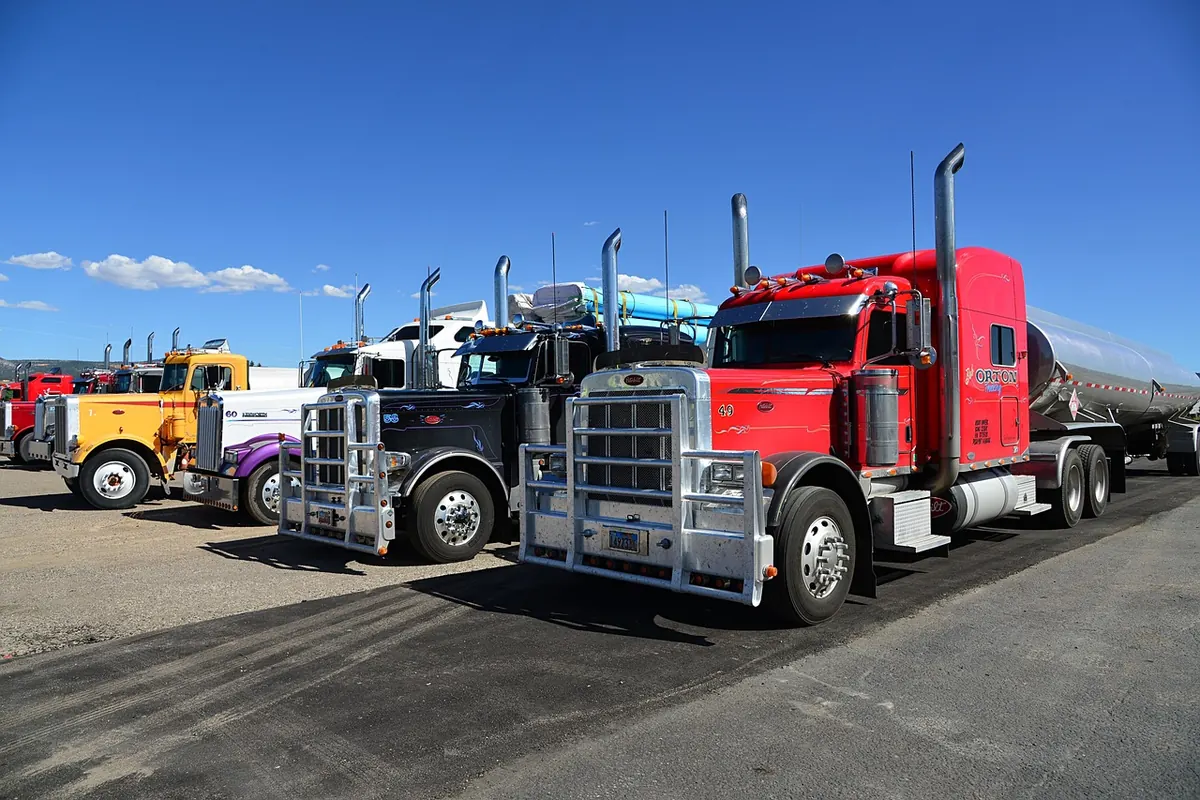
Photo: RonaldPlett / Pixabay
Related Articles